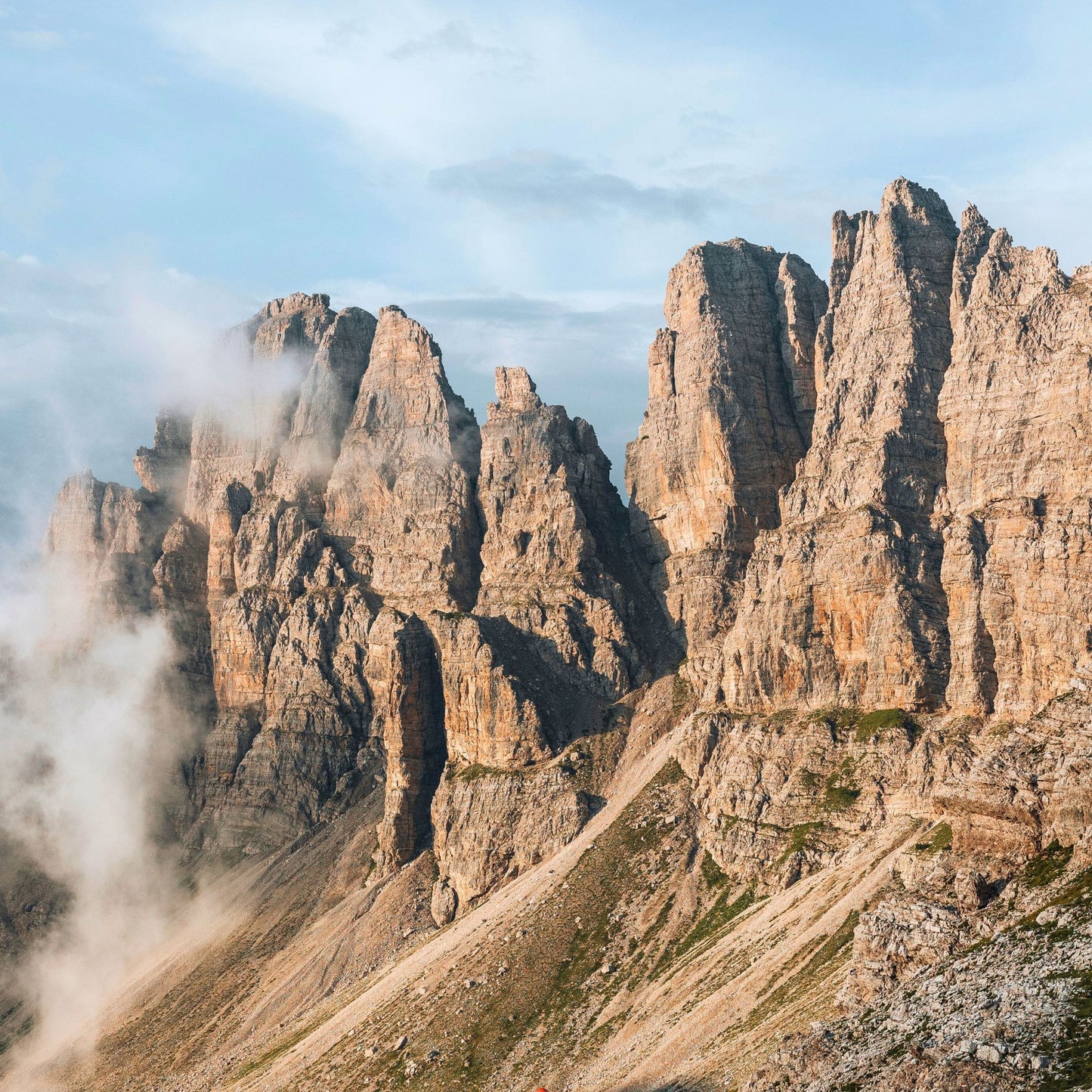
Wilderness Trek in the Friulian Dolomites: 7-10 Day Guided & Self-Guided Adventure

Wilderness Trek in the Friulian Dolomites: 7-10 Day Guided & Self-Guided Adventure

Skip to product information
1 of 5
Regular price €1.080,00 EUR
Regular price Sale price €1.080,00 EUR
Sale Sold out
Estimated price per person. Taxes included.
Mode
Number of days
View full details

About the trekking

Itinerary

Prices

Travel

Accommodation & Meals

Primary Itinerary

Primary Itinerary: 8-Day Wilderness Trek

Day 1: Arrival in the Piave Valley
Activity: Arrival and accommodation check-in | Hiking: None

Arrive in the scenic Piave Valley and settle into one of our partner basecamp hotels. These authentic mountain villages receive minimal tourist traffic despite their spectacular alpine settings, offering you an immediate immersion into genuine Dolomite mountain culture from the moment you arrive.

Day 2: Ascent to the Highland
Elevation gain: 1,050 m (3,445 ft) | Elevation loss: 30 m | Altitude: 690–1,820 m | Distance: 10 km | Duration: 4 hours

Your trek begins with a steady climb from the valley floor through dense forest to a stunning high-altitude refuge near Monte Vedorcia. This exceptional location features two viewpoints just 100 meters apart, each offering panoramic perspectives of the mountain ranges encircling the Piave Valley. Watch the evening sun paint the Spalti di Toro peaks in brilliant shades of orange, then rise early to witness sunrise illuminating the Antelao, Pelmo, and Civetta massifs from the opposite viewpoint.

Tonight's accommodation is truly special—an intimate wooden refuge hosting just 16 guests, where dinner emerges from a traditional wood-fired oven and the dining room centers around an authentic Alpine fireplace.

Day 3: Panorama of the Friuli Dolomites
Elevation gain: 700 m (2,297 ft) | Elevation loss: 1,100 m | Altitude: 1,290–2,050 m | Distance: 10 km | Duration: 5 hours

Today you enter the Spalti di Toro range and gain your first sweeping views deep into the Friuli Dolomites—landscapes you'll explore more intimately in the days ahead. The mountain pass crossing the Spalti di Toro ridge reveals the highest reaches of the Friuli Dolomites, dominated by Cima dei Preti rising to 2,706 meters (8,878 ft).

Standing at the pass, you'll grasp the profound wilderness character of this region: the 360-degree horizon reveals nothing but mountain peaks extending endlessly in every direction, with no trace of human development. Below the pass, the trail descends through the forest edge across terrain of pristine beauty—a wooded tundra landscape dotted with sparse larches and dense undergrowth divided into natural "islands" by dry streambeds.

Day 4: Monfalcon di Forni Pass
Elevation gain: 1,100 m (3,609 ft) | Elevation loss: 970 m | Altitude: 1,290–2,040 m | Distance: 10 km | Duration: 6 hours

Beginning today, each stage becomes significantly more demanding. Expect to climb approximately 1,000 vertical meters each morning and descend a similar distance each afternoon, as most refuges along the route sit at relatively modest elevations between 1,200 and 1,600 meters.

Today's crossing of the Monfalcon di Forni pass separates the Spalti di Toro ridge from the Cridola massif. Like every pass and saddle on this route, the views are extraordinary—the jagged Busas tower rises dramatically nearby, with endless mountain wilderness spreading beyond. Both the ascent and descent follow steep talus slopes, presenting one of the trek's most challenging terrain types.

Day 5: Gentiana Trail
Elevation gain: 1,210 m (3,970 ft) | Elevation loss: 1,030 m | Altitude: 1,400–2,170 m | Distance: 9 km | Duration: 6 hours

Today you venture deeper into the Friuli Dolomites' heart along the scenic Gentiana Trail, named for the alpine gentian flower—a symbol of the Alps alongside the famous edelweiss. This route is celebrated not for botanical diversity but for its spectacular views.

The trail carves through dwarf pine thickets on slopes facing the central Friuli Dolomites, opening continuous panoramas from 1,800–1,900 meters of altitude across the mountains rising above the narrow Meluzzo Valley. Memorable highlights include the tranquil Canpuros meadow, cradled within a natural amphitheater that provides an ideal rest stop, and the striking view of Monte Cridola's numerous white talus streams descending into dark dwarf pine forests.

Day 6: Monte Pramaggiore
Elevation gain: 970 m (3,182 ft) | Elevation loss: 1,310 m | Altitude: 1,180–2,295 m | Distance: 10 km | Duration: 6 hours

Today offers excellent opportunities to observe Alpine ibex, the masters of these high peaks. These magnificent animals often allow close approach—sometimes within 10 meters—for memorable photographs, though always maintain respectful distance from cliff edges.

Your route crosses three mountain passes en route to Monte Pramaggiore, one of the region's most iconic landmarks. Much of today's trek traverses high-altitude terrain featuring sweeping wilderness views, trails skirting dramatic cliff faces, and a challenging ascent along a primitive, minimally maintained path. The day concludes with a descent into the Meluzzo Valley to reach the route's most remote refuge, truly isolated from the outside world.

Day 7: Bell Tower of Val Montanaia
Elevation gain: 1,080 m (3,543 ft) | Elevation loss: 1,650 m | Altitude: 690–2,340 m | Distance: 13 km | Duration: 7 hours

The iconic Campanile di Val Montanaia—a 170-meter rock tower rising from a gorge at approximately 2,000 meters elevation—is the Friuli Dolomites' most famous landmark. This extraordinary natural formation is unusual even by Dolomite standards: while numerous rock spires punctuate these mountains, most rise from high-altitude ridges, whereas the Montanaia tower stands in a wide meadow-level gorge, making it remarkably accessible and providing outstanding photography opportunities.

Above the tower, the trail climbs steeply toward the mountain pass, disappearing into talus before reemerging near the summit. The subsequent descent across the pass's far side represents the trek's longest and most technical downhill section. After reaching the forest belt, you'll stop at a refuge for a well-earned meal before following gentle trails back to your basecamp hotel in the Piave Valley.

Day 8: Departure from the Piave Valley
Activity: Departure | Hiking: None

Your Friuli Dolomites wilderness adventure concludes today. You've completed an exploration of the Dolomites' most pristine region—no other hut-to-hut trek in the Dolomites ventures this deeply into untouched wilderness.

Alternative Trek Options

7-Day Accelerated Trek
Complete the wilderness route in 5 hiking days with intensive daily distances from the outset. Days 2 and 3 merge into a single challenging day: 1,450 m elevation gain, 880 m descent, 15 km distance, 8 hours duration. A shortcut option exists, though you'll miss some spectacular scenery.

9-Day Extended Trek
Follow the 8-day primary itinerary plus one additional day hike from a central basecamp refuge in the most remote area of ​​the Friuli Dolomites.

10-Day Extended Trek
Follow the 8-day primary itinerary plus two additional day hikes from a central basecamp refuge.

Day Hike Options (9 & 10-Day Treks):

  • Monte Ferrara Summit – Accessible climb with 360° panoramic views
  • Abandoned Highland Campsite Loop – Circuit to historic high-altitude site
  • Postegae Ridge Traverse – Technical ridge linking multiple peaks

All day hikes use light daypacks and return to the same basecamp each evening.

What's Included

Tour Types & Pricing Structure

Self-Guided Tours
Explore independently with detailed maps, pre-booked accommodations, and 24/7 support. Perfect for experienced hikers who prefer flexibility.
Base price shown | Hiker supplement only: +€130

Private Guided Tours
Your personal English-speaking mountain guide leads your private group through the wilderness. Ideal for those seeking expert knowledge and navigation.
Price shown is for groups of 4 | Contact us for pricing for smaller or larger groups

Flexible Dates
Both tour types operate on your preferred dates throughout the summer season (June 20 – September 21).

Tour Duration
The indicated tour duration includes arrival and departure days. Accommodation is included for both your first night (arrival day) and final night (before departure).

What's Included: Self-Guided Tour

Accommodation:

  • Mountain refuge stays: 4–7 nights (depending on itinerary) in shared dormitories
  • Basecamp hotel: 3-star hotel or B&B on first and final nights (double/triple rooms)

Meals:

  • Full breakfasts daily (mountain huts and hotels)
  • Dinners in mountain refuges every evening

Planning & Support:

  • Custom itinerary and hiking schedule developed by MONT Trekking guides
  • Specialized 1:25,000 hiking maps (1 map per booking)
  • Pre-trip instructions and logistics assistance
  • 24-hour emergency on-call support throughout your trek

Transportation:

  • Transfer from basecamp hotel to trailhead (trek start)
  • Return transfer from trail end to basecamp hotel

What's Included: Private Guided Tour

Everything in Self-Guided Tour, Plus:

Expert Guidance:

  • Local English-speaking mountain guide for the entire trek
  • Expert knowledge of trails, wildlife, geology, and local culture
  • Navigation and route-finding on challenging terrain
  • Safety management and group coordination

Complimentary Services (All Tours)

  • Secure luggage storage at basecamp hotel during your trek
  • Electronic maps with GPS navigation for your smartphone (Self-Guided tours only; Android or iOS required)

What's Not Included

Additional Costs to Budget:

  • Travel insurance (strongly recommended)
  • Beverages at dinner (wine, beer, soft drinks)
  • Lunches during hiking days (available for purchase at refuges, typically €12–18)
  • Hot shower usage at mountain refuges (€3–5 per shower)
  • Single room supplement at basecamp hotels (for non-solo travelers)
  • Tourist tax at accommodations where applicable (typically €1–2 per night)
  • Personal expenses and anything not explicitly listed in included services

Optional Upgrades & Extras

Mountain Refuge Private Rooms
Upgrade to private 2-, 3-, or 4-bedded rooms at select mountain refuges (subject to availability)
Supplement: €10 per person per night

Single Room at Basecamp Hotel
Private accommodation on arrival and departure nights (for non-solo travelers)
Supplement: €60 per person total

Airport Transfer Service
Private transfer between Venice Marco Polo Airport or Treviso Airport and your basecamp hotel
Available on request | Contact us for pricing

Pricing Information

Prices shown are per person and include VAT
Valid for Summer 2026 season (June 20 – September 21)
Currency: EUR (€)

Getting to the Basecamp

Basecamp Location
Your trek begins and ends in the Valle del Piave valley, with basecamp hotels located in the towns of Calalzo di Cadore and Pieve di Cadore.

Nearest Airports

Venice Marco Polo Airport (VCE) – Primary Option
The most convenient airport for reaching the Friuli Dolomites basecamp.

Travel time: Approximately 2 hours by train and bus
Distance: ~130 km (80 miles)

Treviso Airport (TSF) – Alternative Option
Budget airline hub with similar travel time to the basecamp.

Travel time: Approximately 2–2.5 hours by train and bus
Distance: ~110 km (68 miles)

Important Note:Depending on your flight arrival time, you may need to stay overnight in Venice or Treviso to connect with morning public transportation to the basecamp. Early morning or late evening flights may require a hotel night in Venice.

Transportation to Basecamp

Public Transportation
Train and bus connections run regularly from Venice and Treviso to Valle del Piave. The journey involves:

  • Train from Venice/Treviso to Belluno or Calalzo di Cadore
  • Local bus connections to your basecamp hotel (if needed)

We provide detailed schedules and step-by-step transportation instructions after booking.

Private Airport Transfer (Optional)
Private transfer service available on request for direct, hassle-free transportation from Venice Marco Polo Airport or Treviso Airport to your basecamp hotel.

Contact us for pricing and availability

Pre-Trip Planning Assistance

We Help You Plan Your Journey
Before booking flights, contact us for:

  • Current train and bus schedules
  • Optimal arrival and departure times
  • Connection recommendations
  • Overnight accommodation suggestions in Venice (if needed)

This ensures smooth logistics and avoids missed connections or unnecessary overnight stays.

Insurance and Visa

Travel Insurance

Required Coverage
It is essential to have appropriate travel insurance that covers mountain hiking activities.

Important:You do NOT need to include technical climbing or mountaineering coverage unless you plan to climb independently during the trek. Standard hiking/trekking coverage is sufficient for this itinerary.

What Your Insurance Should Cover:

  • Medical expenses and emergency evacuation
  • Trip cancellation and interruption
  • Lost or delayed baggage
  • Hiking and trekking activities up to 3,000 meters altitude

We strongly recommend purchasing insurance at the time of booking.

Visa Requirements

EU/EEA Citizens
No visa required for travel to Italy.

Non-EU/EEA Citizens
Check visa requirements for Italy based on your nationality. Most visitors can enter Italy visa-free for tourism stays up to 90 days within the Schengen Area.

Visa Support Documentation
If you require an Italian visa, we will provide a booking confirmation letter for all days of your trip that you can submit with your visa application.

Request this document after completing your booking

Pre-Departure Checklist

Before your trek, ensure you have:

  • Valid passport (minimum 6 months validity recommended)
  • Travel insurance with hiking coverage confirmed
  • Booking confirmation from Dolomist
  • Emergency contact numbers (provided after booking)

Accommodation

Basecamp Hotels

Your first and final nights are spent in comfortable 3-star hotels or B&Bs in the Valle del Piave valley, providing a smooth transition into and out of the wilderness experience.

Mountain Refuge Stays

During the trek, you'll stay overnight in traditional alpine refuges with the following amenities and services:

Sleeping Arrangements:

  • Shared dormitory rooms with bunk beds (standard option)
  • Private 2-, 3-, or 4-bedded rooms (must be pre-booked, subject to availability)
  • Mattresses, pillows, and warm blankets provided in all rooms
  • Heating systems available (typically not needed in summer months)

What to Bring:

  • For shared dormitories:Sleeping bag liner required (lightweight cotton or silk liner)
  • For private rooms:Bed linen often provided (we'll confirm if liner is needed when you book private rooms)
  • Important:Warm sleeping bags are unnecessary—blankets keep you comfortable
  • Clean indoor footwear for refuge use (lightweight slides or flip-flops are ideal)

Refuge Facilities & Services:

  • Hot showers available (€3–5 per use, paid separately at the refuge)
  • Clean toilet facilities
  • Dining room with communal atmosphere
  • Small shop for essentials: water, snacks, sandwiches, chocolate bars
  • Limited charging stations (bring a power bank recommended)
  • Meals included (breakfast and dinner)

Refuge Etiquette & Culture:

  • Communal dining atmosphere—dinner is a shared social experience
  • Respect quiet hours (typically 10:00 PM – 6:00 AM)
  • Indoor footwear required at all times inside refuges
  • Cash preferred for extras (showers, drinks, snacks)—many refugees have limited card payment
  • Charge devices during meal times when outlets are available
  • Book hot showers early evening—hot water can be limited

Meals

What's Included

All hut-to-hut treks include breakfast and dinner at mountain refuges and basecamp hotels. Lunch is not included but can be easily arranged.

Breakfast (7:00 AM – 9:00 AM)

Standard Alpine Breakfast Includes:

  • Unlimited coffee and tea
  • Fresh bread with butter
  • Jam, honey, and chocolate spread
  • Select refuges also offer: ham, cheese, muesli, yogurt

Pro Tip:After breakfast, ask refuge staff to fill your thermos with hot water or tea—this service is complimentary to most refuges and perfect for staying hydrated on the trail.

Dinner (7:00 PM – 7:30 PM)

Dinner is served at a fixed time for all guests, creating a warm communal atmosphere.

Traditional Alpine Multi-Course Dinner:

  • Appetizer:Soup or cold starter
  • First course:Pasta, risotto, polenta, or traditional dumplings (canederli)
  • Second course:Meat or vegetarian protein with seasonal vegetables
  • Dessert:Homemade cakes, apple strudel, or local specialties

Important:Beverages at dinner arenot included. Water, wine, beer, coffee, and tea must be ordered and paid for separately at each refuge.

Lunch on the Trail

No Refugees Along Daily Routes

The trek passes through pristine wilderness with no facilities between overnight stops. Plan accordingly for midday meals.

Packed Lunch Option (Recommended)

Order a packed lunch the evening before from your refuge for the next day's hike.

Typical Packed Lunch Includes:

  • 1–2 hearty sandwiches (cheese, salami, or vegetarian options)
  • Yogurt or fresh fruit
  • Chocolate bar or energy snack
  • Bottled water (500ml)

Cost: €7–10 for packed lunch
Order at dinner the evening before your hiking day

Alternative Options:

  • Bring your own trail snacks and energy bars from home
  • Purchase supplies at refuge shops (limited selection available)
  • Combine: Order packed lunch + supplement with personal high-energy snacks for longer days

Dietary Requirements

Mountain refuges can accommodate most dietary needs with advance notice:

  • Vegetarian:Options available at all refuges (no advance notice needed)
  • Vegan:Available with advance notice (notify us at booking)
  • Gluten-free:Available at most refuges (notify us at booking; availability varies by location)
  • Food allergies:Must be communicated before trek starts so we can coordinate with each refuge

Important:Please inform us of any dietary restrictions or food allergies when booking. We'll coordinate with all refuges along your route to ensure your needs are accommodated.

Typical Daily Meal Schedule

  • 7:00 AM – 9:00 AM:Breakfast at the refuge
  • 12:00 PM – 1:00 PM:Packed lunch on the trail (midday break)
  • 7:00 PM – 7:30 PM:Dinner at refuge (fixed seating time)
Anello delle Dolomiti Friulane: 5 giorni di pura avventura ⛺️🏔️✨ - Dolomist
Campanile di Val Montanaia: conquista la cima, notte in Rifugio e masterclass arrampicata - Dolomist
Rifugio Giaf – Dolomiti Friulane - Dolomist
Tour guidato di 5 giorni all'Anello delle Dolomiti Friulane - Dolomist
Trails
Difficulty
Stay
Solitude

Quality of Trails

The trails on this route include lightly maintained sections in high-altitude terrain. Paths ascending and descending through talus fields are not well-trodden, and via ferrata routes are not present. Trail markings on talus slopes are minimal due to natural erosion and rockfall. Some trails do not appear on standard maps, while certain designated routes may be unsafe or closed. For these reasons, it is essential to follow the route instructions provided by your guide and avoid deviating from the planned itinerary.

Factors of Difficulty

  • Continuous ascents and descents of 1,000 m (3,280 ft) almost every day
  • Steep climbs and descents on loose talus and scree slopes
  • Wild, lightly maintained trails at higher elevations
  • Insufficient trail marking at higher altitude and on talus terrain
  • Map inaccuracies in remote sections
  • No mobile coverage on most of the route

Accommodation

Comfort levels at mountain refuges range from basic to above-average. All huts offer 4-bedded private rooms; some refuges have 2- or 3-bedded rooms. Hot showers are available in all huts, though occasionally they may be temporarily out of service due to limited resources or maintenance. Most refuges generate electricity autonomously using solar panels or generators. We recommend bringing a power bank to charge your phone and navigation devices in any conditions without relying on hut availability.

Solitude

The Friuli Dolomites remain almost deserted throughout the entire summer season. You will very rarely encounter other hikers outside the mountain refuges, making this one of the most secluded trekking experiences in the Dolomites.

Anello delle Dolomiti Friulane: 5 giorni di pura avventura ⛺️🏔️✨ - Dolomist
Campanile di Val Montanaia: conquista la cima, notte in Rifugio e masterclass arrampicata - Dolomist
Rifugio Giaf – Dolomiti Friulane - Dolomist
Tour guidato di 5 giorni all'Anello delle Dolomiti Friulane - Dolomist
 

€1.080,00

Self-Guided Hiking Tour / 7

FAQ

Our team is here to help. Find answers to the most frequently asked questions about your Friuli Dolomites trek.

01

Safety Considerations

Professional Guidance & Safety Standards

Private Guided Tours

Your trek is led by professional mountain guides with:

  • Years of guiding experience in the Friuli Dolomites region
  • Official professional licenses and certifications
  • Expert training in wilderness emergency response
  • Regular qualification upgrades and safety protocol updates
  • Deep local knowledge of terrain, weather patterns, and route conditions
  • Full compliance with Italian national mountain guiding regulations

Self-Guided Tours

Our self-guided routes are carefully planned to be safe for experienced hikers who:

  • Follow provided route instructions and safety guidelines
  • Dress appropriately for alpine conditions
  • Make realistic time calculations using our detailed hiking schedules
  • Possess good mountain fitness and navigation awareness

Trail Standards:

  • Well-maintained paths with clear direction signage
  • Exposed or technical sections are secured with fixed cables and protection
  • No specialized climbing skills or technical gear required (unless explicitly stated in tour description)
  • Routes follow established, marked trails through the wilderness

Essential Safety Requirements

For All Participants:

Before Your Trek:

  • Read our completeSafety Considerations & Emergency Proceduresguides
  • Understand basic mountain safety rules
  • Ensure appropriate fitness level for daily elevation gains (average 1,000m)
  • Have proper travel insurance with hiking coverage

During Your Trek:

  • Follow all route instructions and safety guidelines
  • Stay on marked trails—do not deviate from planned routes
  • Monitor weather conditions and be prepared for changes
  • Respect your physical limits and adjust pace accordingly
  • Maintain communication with emergency contacts

Emergency Support

24-Hour Emergency Contact:
Available throughout your trek for urgent assistance

Phone: +39 0463 63 60 80

Emergency Protocols:

  • Professional rescue coordination with local mountain rescue services
  • Immediate response for medical emergencies
  • Weather-related rerouting or evacuation support
  • Lost or delayed hiker location assistance

Understanding Mountain Risks

Important Reminder:

Mountain environments carry inherent natural risks, including:

  • Rapidly changing weather conditions
  • Uneven and challenging terrain
  • Altitude-related considerations
  • Limited communication in remote areas
  • Wildlife encounters

Risk Mitigation:
We minimize these risks through professional planning, clear safety guidelines, and support systems. However, participants must understand that mountain hiking involves unavoidable natural hazards and personal responsibility is essential.

Questions About Safety?

If you have any concerns about safety protocols, trail conditions, or emergency procedures, please contact us before booking:

Phone: +39 0463 63 60 80
Available for pre-trip safety consultations

02

Insurance and Visa

Travel Insurance Requirements

Coverage Required

Travel insurance with hiking coverage isessentialfor this trek. Your policy must include:

  • Medical expenses and emergency evacuation(mountain rescue can be costly)
  • Trip cancellation and interruption protection
  • Lost or delayed baggage coverage
  • Hiking and trekking activities up to 3,000 meters altitude

Important:You doNOTneed technical climbing or mountaineering coverage unless you plan to climb independently during the trek. Standard hiking/trekking insurance is sufficient for this itinerary.

Why Insurance Matters

Mountain environments carry inherent risks. Adequate insurance ensures:

  • Peace of mind during your wilderness adventure
  • Financial protection in case of injury, illness, or emergency evacuation
  • Coverage for unexpected trip changes or cancellations

Recommendation:Purchase insurance at the time of booking to ensure maximum coverage, including pre-departure protection.

Visa Requirements for Italy

Do You Need a Visa?

EU/EEA/Swiss Citizens:
No visa required for travel to Italy.

US, Canadian, Australian, UK, and Many Other Citizens:
No visa required for tourism stays up to90 days within the Schengen Area.

Other Nationalities:
Check Italy's visa requirements based on your passport. Most travelers can enter visa-free for short tourism visits, but requirements vary by country.

Verify your specific visa requirements through theItalian Ministry of Foreign Affairsor your nearest Italian embassy/consulate.

Visa Support Documentation

If You Require a Visa:

We provide abooking confirmation letterfor all days of your trip that you can submit with your Italian visa application.

This document includes:

  • Your complete trek itinerary with dates
  • Confirmed accommodation reservations (hotels and mountain refuges)
  • Tour operator details and contact information
  • Proof of prepaid services

How to Request:
After completing your booking, contact us to request your visa support letter. We'll provide it within 2–3 business days.

Visa Processing Tip:Apply for your Italian visa well in advance (at least 4–6 weeks before departure) as processing times vary by location.

Pre-Departure Checklist

Before your trek, ensure you have:

✓ Valid passport (minimum 6 months validity from travel date recommended)
✓ Travel insurance confirmation with hiking coverage
✓ Visa (if required) or verified visa-free entry eligibility

✓ Booking confirmation from Dolomist
✓ Emergency contact numbers (provided after booking)

Questions about insurance or visa requirements? Contact us for assistance:

Phone: +39 0463 63 60 80
Email: Available through contact form

03

Weather in the Dolomites

Best Weather Season

Prime Trekking Period: Mid-July to Mid-September

The most stable and reliable weather in the Friuli Dolomites occurs from thesecond week of July through mid-September, characterized by:

  • Warm, sunny days ideal for mountain trekking
  • Moderate rainfall with quick-clearing afternoon thunderstorms
  • Snow-free mountain passes and trails
  • Comfortable hiking temperatures at altitude
  • Reliable weather patterns for multi-day treks

This is the optimal window for your wilderness trek.

Weather by Month

June (Early Season)

Conditions:Generally favorable but less predictable

What to Expect:

  • Warmer valley temperatures, cooler at altitude
  • Higher chance of unsettled weather patterns
  • Snow consideration:Mountain passes above 2,000m may retain winter snow
  • Route flexibility may be required based on snow conditions

Best for:Experienced hikers comfortable with variable conditions and potential route adjustments.

July & August (Peak Season)

Conditions:Most stable and warmest weather

What to Expect:

  • Warmest temperatures of the season
  • Clear, sunny days with excellent visibility
  • Afternoon thunderstorms typical (usually brief, 1-2 hours)
  • Hail possible during storms
  • All passes and trails fully accessible
  • Refugees fully staffed with best service

Best for:All experience levels; ideal first-time Dolomites trekkers.

September (Late Season)

Conditions:Beautiful but increasingly variable

First Half (Early September):

  • Still excellent trekking conditions
  • Fewer crowds, quieter trails
  • Autumn colors begin appearing
  • Stable weather similar to August

Second Half (Mid to Late September):

  • Increasingly unpredictable weather
  • Higher probability of extended rainy periods
  • Fresh snow possible above 2,000m (6,560 ft)
  • Earlier sunsets and cooler temperatures
  • Some refuges may close after mid-September

Best for:Experienced hikers seeking solitude and comfortable with weather uncertainty.

Temperature Guide

High Altitude (2,000m / 6,560 ft and above)

Where most trekking routes pass

Daytime Temperatures:

  • Sunny August day:Up to 20°C (68°F) during warmest afternoon hours—comfortable for hiking
  • Cloudy or rainy day:Around 10°C (50°F) throughout the day—requires warm layers

Morning & Evening:

  • Always cool to cold: 5-10°C (41-50°F)
  • Chilly conditions at sunrise and after sunset
  • Warm layers essential for refuge mornings and evenings

Valley Elevations (1,000-1,500m / 3,280-4,920 ft)

Basecamp areas and lower sections

Daytime Temperatures:

  • Can reach 27°C (80°F) on warmest days
  • Pleasant and comfortable for activities

Morning & Evening:

  • Fresh and cool: 12-18°C (54-64°F)
  • Not humid or stuffy, even during hottest weeks
  • Comfortable sleeping conditions

Typical Weather Patterns

Daily Weather Cycle (July-August):

  • Morning (6 AM - 11 AM):Clear skies, cool temperatures, best visibility for panoramic views
  • Midday (11 AM - 3 PM):Warmest period, clouds begin forming over peaks
  • Afternoon (3 PM - 6 PM):Thunderstorms likely, brief (1-2 hours), with possible hail
  • Evening (6 PM onwards):Skies clear, temperatures drop, beautiful sunsets

Hiking Strategy:Start early to maximize clear morning conditions and reach refuge before afternoon storms.

What to Pack for Weather

Essential Layers:

  • Waterproof rain jacket with hood (non-negotiable)
  • Waterproof rain pants or overpants
  • Warm insulating layer (fleece or down jacket) for mornings, evenings, and cold days
  • Moisture-wicking base layers
  • Sun protection: hat, sunglasses, sunscreen (high UV at altitude)

Weather Considerations:

  • Never "just shorts and t-shirt"- conditions change rapidly at altitude
  • Pack for 10°C and 20°C in the same day
  • Layering system is essential for comfort and safety
  • Waterproof gear must be easily accessible in backpack

Weather-Related Trek Adjustments

Our Approach to Weather Safety:

  • Daily weather monitoring and forecast analysis
  • Route adjustments for severe weather (thunderstorms, heavy snow)
  • Alternative itineraries for blocked passes (primarily June)
  • Refuge coordination for extended bad weather
  • Safety always prioritized over schedule adherence

June Snow Considerations:
If snow blocks high passes in June, we'll modify your route to accessible alternatives while maintaining the trek's wilderness character and daily hiking distances.

Frequently Asked Questions

Q:What if it rains for multiple days?
We continue trekking in light to moderate rain (you'll have waterproof gear). In severe weather, we may adjust timing, take refuge rest days, or modify routes for safety.

Q: Are afternoon thunderstorms dangerous?
When following our schedule and starting early, you'll typically reach refuge before storms arrive. Refuges provide safe shelter, and storms usually pass within 1-2 hours.

Q: Is the weather forecast reliable?
Mountain weather forecasts are reasonably reliable 2-3 days ahead but can change rapidly. We monitor conditions daily and adjust plans as needed.

Q: What's the coldest it could be?
At 2,000m altitude on a cold, rainy day, temperatures can drop to 5-8°C (41-46°F). Proper layers keep you comfortable in all conditions.

Weather Resources

For current conditions and forecasts:

  • We provide weather updates and guidance before and during your trek
  • Local mountain weather forecasts monitored daily
  • Real-time conditions shared by refuge network

Weather preparation questions? Contact us for guidance on packing and seasonal planning.

04

Clothing and Gear

Essential Gear for Your Trek

Proper equipment is crucial for comfort and safety in the alpine environment. After booking, you'll receive adetailed packing list specifically tailored to your itinerary and travel dates—but here are the core essentials every trekker needs.

Footwear (Critical)

Hiking Boots - Non-Negotiable

Recommended:High-cut (ankle-height) hiking boots with:

  • Ankle support for stability on rocky, uneven terrain
  • Stiff soles for scrambling over talus and scree
  • Waterproof or water-resistant construction
  • Well broken-in (wear on 2-3 day hikes before your trek)

Why high-cut boots?The Friuli Dolomites involve steep ascents/descents on loose rock daily. Ankle support significantly reduces injury risk and fatigue on challenging terrain.

Wrong footwear = trek-ending problems.Low-cut trail runners lack necessary support and protection.

Refuge Footwear

Required:Clean, lightweight indoor shoes for mountain refuges

  • Slides, flip-flops, or lightweight sandals
  • Crocs or similar slip-on shoes work perfectly
  • Hiking boots are not allowed inside refuges

Pack these in an easily accessible spot—you'll use them every evening.

Clothing System (Layering Essential)

Even in summer, mountain weather ranges from 5°C (41°F) to 20°C (68°F) in a single day. A proper layering system keeps you comfortable in all conditions.

Base Layer (Next to Skin)

  • Moisture-wicking synthetic or merino wool (NOT cotton)
  • Long-sleeve shirt recommended (sun protection + warmth flexibility)
  • 2-3 shirts for multi-day hygiene

Insulation Layer (Warmth)

  • Fleece jacket or lightweight down/synthetic insulated jacket
  • Essentialfor mornings, evenings, cold days, and refuge comfort
  • Compressible and lightweight options work best

Shell Layer (Weather Protection)

  • Waterproof and windproof jacket with hood(absolutely essential)
  • Waterproof rain pants or overpants
  • Quality rain protection is non-negotiable in mountain weather

Hiking Pants

  • Long trekking pants (NOT jeans—they're dangerous when wet)
  • Convertible zip-off pants work well
  • Quick-dry synthetic fabric recommended
  • Avoid cotton—it stays wet and cold

Head Protection

  • Sun hat or cap with brim (high UV exposure at altitude)
  • Warm beanie or headband for cold mornings/evenings

Backpack & Hydration

Daypack for Hiking

  • 30-40 liter capacityfor daily essentials
  • Comfortable hip belt and sternum strap (weight distribution is key)
  • Rain cover or waterproof liner
  • External attachment points for trekking poles

What You'll Carry Daily:

  • Water (2 liters minimum capacity)
  • Packed lunch and snacks
  • Rain gear and extra layers
  • First aid kit, sunscreen, personal items
  • Camera, phone, power bank

Hydration Critical

  • Minimum 2 x 1-liter water bottles(refillable at refuges)
  • OR hydration reservoir/bladder system (2-3 liters)
  • Reusable bottles preferred (reduce plastic waste)

Sun & Eye Protection

Mountain Sun is Intense

UV radiation increases approximately 10% per 1,000m elevation. At 2,000m+, sun exposure is significantly stronger than at sea level.

Required:

  • Sunglasses with UV protection(category 3 or 4 for glacier/high altitude)
  • High SPF sunscreen(30+ minimum, 50+ recommended)
  • Lip balm with SPF
  • Reapply sunscreen every 2-3 hours while hiking

Trekking Poles (Highly Recommended)

Why Use Poles?

  • Reduce knee strain on steep descents (critically important)
  • Improve stability on loose talus and scree
  • Increase uphill efficiency (25% less energy expenditure)
  • Balance support on exposed sections
  • Help prevent ankle injuries

Recommendation:Adjustable, collapsible poles with shock absorption

Note:Not mandatory, but 95% of experienced Dolomites trekkers use them for good reason.

Personal Items & Accessories

Toiletries & Hygiene:

  • Travel-size essentials (shampoo, soap, toothbrush, toothpaste)
  • Quick-dry towel (refuges provide bedding but not towels)
  • Biodegradable soap preferred (mountain water protection)
  • Toilet paper and hand sanitizer

First Aid & Medications:

  • Personal prescription medications (bring extra)
  • Blister treatment (Compeed or moleskin)
  • Pain reliever (ibuprofen/acetaminophen)
  • Basic first aid supplies
  • Altitude sickness medication if prone (rare below 3,000m)

Electronics:

  • Power bank/portable charger(refuge outlets are limited)
  • Phone for GPS navigation (self-guided) and photos
  • Headlamp or flashlight (refuge late evenings, early mornings)
  • Universal adapter if needed (Italy uses Type F/L plugs)

Documents:

  • Passport or ID
  • Travel insurance card
  • Booking confirmation
  • Emergency contact numbers (provided after booking)

Optional but Useful

  • Trekking gaiters (keep rocks/debris out of boots)
  • Lightweight gloves (cold mornings or via ferrata sections)
  • Camera and extra memory cards
  • Book or e-reader for refuge downtime
  • Playing cards (refuge evening entertainment)
  • Earplugs (shared dormitory rooms can be noisy)

What NOT to Bring

Leave at Home:

  • ❌ Jeans or cotton clothing (dangerous when wet, stays cold)
  • ❌ Heavy clothing or excessive layers (you'll carry everything daily)
  • ❌ Valuable or expensive jewelry
  • ❌ Full-size toiletries (travel-size only)
  • ❌ More than one book
  • ❌ "Just in case" items (pack light, refugees have basics)

Packing Philosophy:Every item in your pack, you'll carry uphill 1,000 vertical meters daily. Pack thoughtfully.

Detailed Packing List Coming

After booking, we provide:

  • Personalized packing listtailored to your specific itinerary
  • Weather-appropriate recommendationsbased on your travel dates
  • Seasonal adjustments(June vs August vs September guidance)
  • Self-guided specific items(maps, navigation tools)
  • Tips for minimizing pack weightwhile maintaining comfort

Please read this list carefully before your trek.Proper preparation directly impacts your comfort and enjoyment.

Gear Questions?

Unsure about any equipment? Need recommendations for specific brands or items? Contact us for personalized guidance:

Phone: +39 0463 63 60 80
We're happy to help you prepare properly for your adventure

Where to Buy Gear

Before Departure:
Most items available at outdoor retailers in your home country (REI, Decathlon, local hiking shops)

In Italy:
Limited outdoor gear shops in the Piave Valley.Do not plan to buy essential items (boots, rain jacket) after arrival.Come prepared.

Rental Options:
Contact us if you need to rent technical items like trekking poles or specialized gear.