

Both options come fully organized. Rifugios booked, itinerary planned, support available throughout. The only question is whether you want a local guide walking with you each day.
Guided and self-guided trekking in the Dolomites start from the same foundation: no logistics to manage, no reservations to chase, no surprises at the rifugio door. Dolomist handles everything in both cases. What changes is the human presence on the trail itself.

The UNESCO Dolomites — same landscape, two different ways to experience it.
In This Guide
What both options include
Before looking at differences, it's worth understanding what you get either way. Both guided and self-guided treks include:
Included in both options
You're not choosing between supported and unsupported. You're choosing how much human presence you want on the trail itself.
The real difference
On a guided trek, a local expert walks with you every day. They read the weather on the ground — not from an app — adapt the route in real time, and bring the kind of contextual knowledge no map can hold: the geology of the rock underfoot, the history of each rifugio, the Ladin culture of these valleys. Pace and decisions are handled. You just walk.
On a self-guided trek, you walk with whoever you choose — a partner, friends, family, or solo. Same itinerary, same rifugios, same phone support on call. The difference is that each morning you leave the rifugio with a map and schedule in hand, set your own pace, and move through the mountain in your own silence.
The direct comparison
Local guide present every day. Reads conditions in real time, adapts the route, answers every question.
You walk with whoever you choose. Detailed itinerary and maps in hand. Phone support always available.
Geology, Ladin culture, alpine history, flora — surfaces naturally through the guide as you walk.
Your itinerary includes notes on key points of interest. Discovery is yours to make.
Handled by the guide on the ground. If conditions shift, they decide the next move.
Team alerts you in advance. Field decisions are yours, with phone support always available.
Calibrated by the guide to your group. Stops, walking tempo, lunch breaks — all flow without thinking.
Total freedom. Start when you want, stop as long as you want, manage your days entirely.
You choose who comes — a partner, friends, family, or solo. The guide adapts to your group entirely.
You choose who comes — identical. You walk at your own pace, just the people you've chosen.
Rifugios, maps, itinerary, luggage transfer: all included and handled.
Rifugios, maps, itinerary, luggage transfer: all included and handled. Identical.
Who guided trekking is for
Choose guided if…
Choose self-guided if…
How it works in practice
In both cases, when you arrive at the base hotel everything is already waiting: maps, printed day-by-day schedule, transport instructions. Rifugios are booked with dinner and breakfast. The luggage you don't carry arrives at your destination ahead of you.
On a self-guided trek, phone support runs 24 hours a day for the entire duration. If you're uncertain about a fork, if the weather turns, if something unexpected comes up: you call and reach someone who knows the terrain. You're never truly alone.
Self-guided support — what it means in practice
The team monitors weather and alerts you in advance when route adjustments are needed. Digital GPS maps cover Dolomites routes. The printed schedule breaks each day into ascents and descents with estimated times and route options. If plans need to change — a hut, a stage, a transfer — the team handles the rebooking.
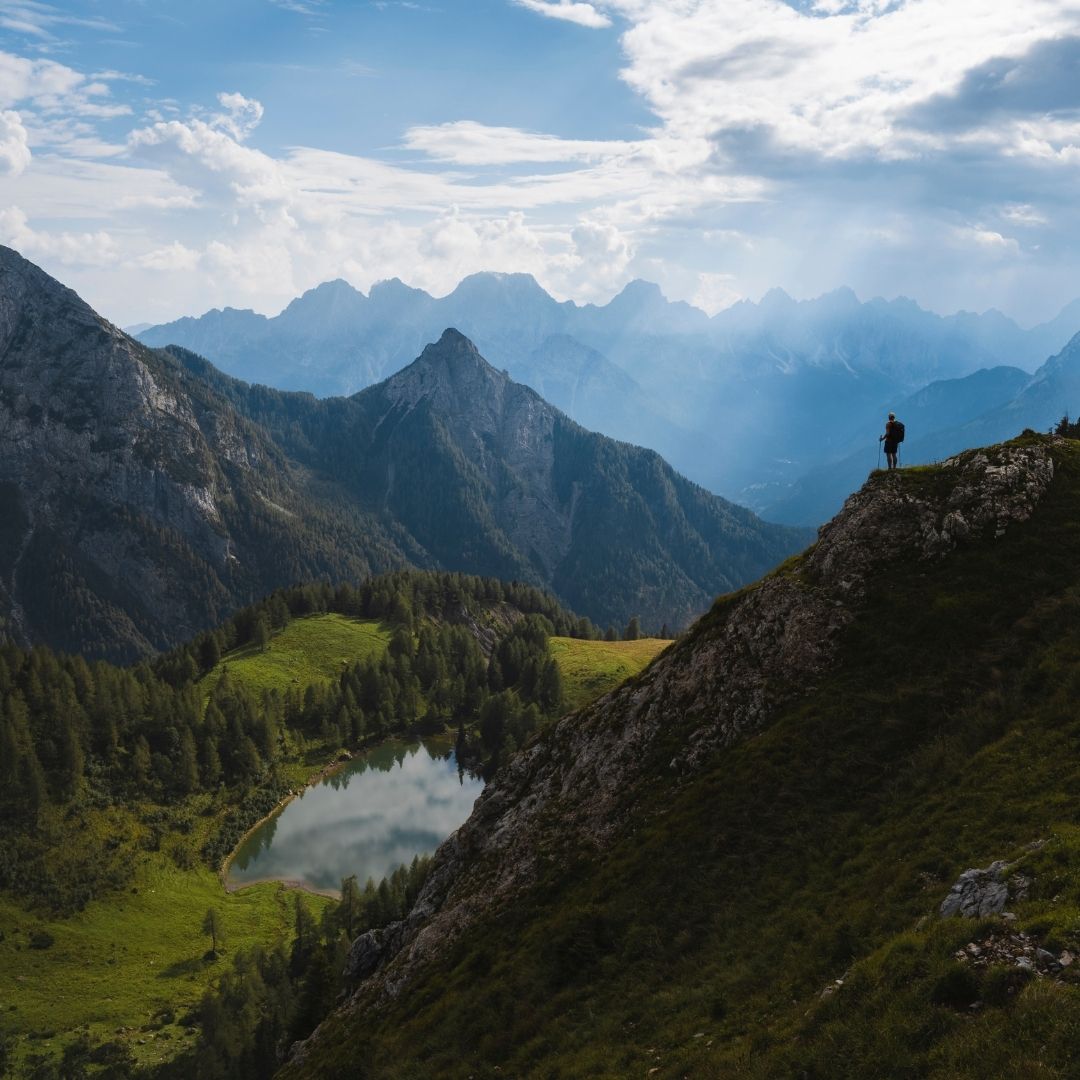
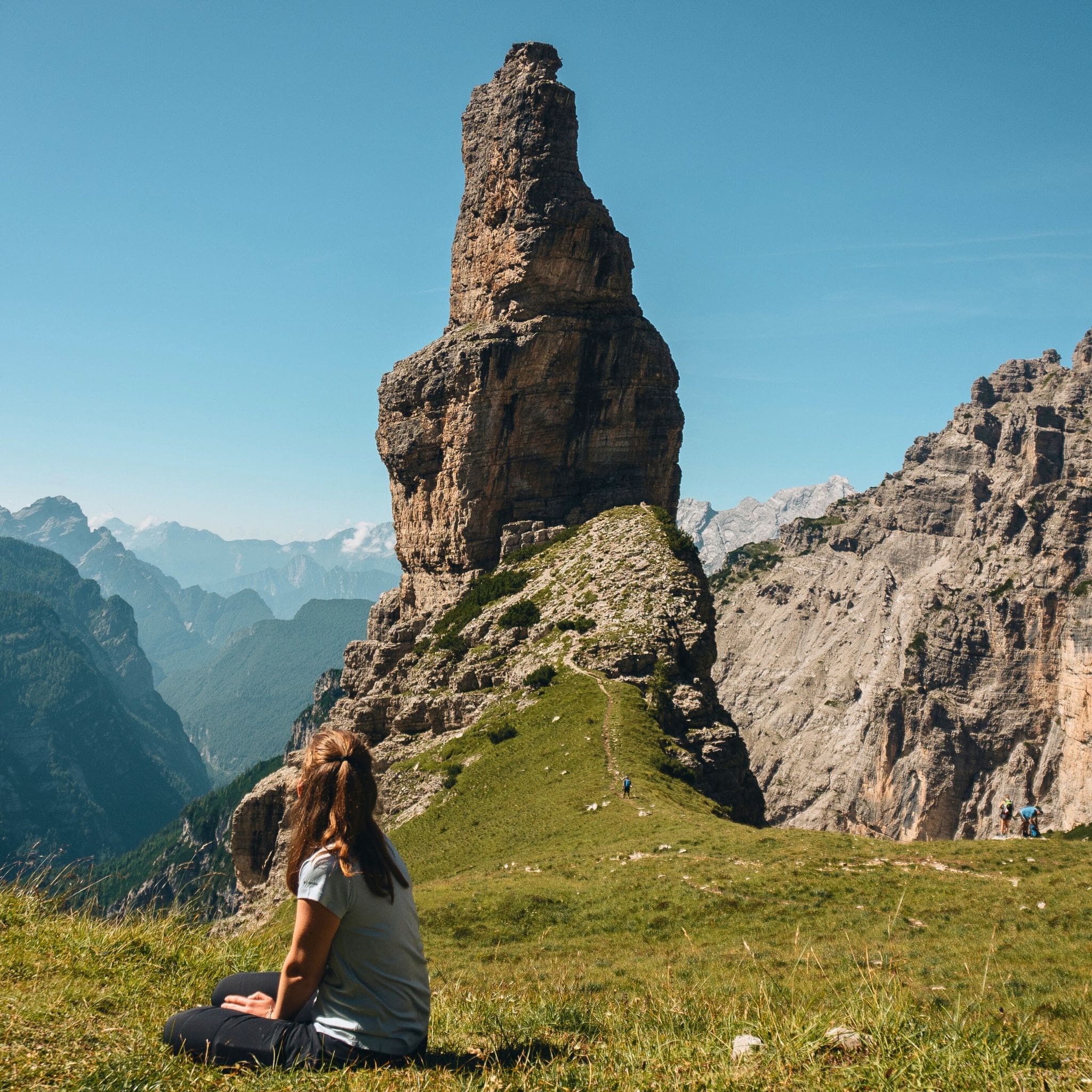
Guided in the Puez-Odle (left), self-guided on the Dolomites Crossing (right) — the same organizational backbone, two different experiences on the trail.
Ready to choose?
Two reference treks.
You decide how to live them.
5–7 days through the Puez-Odle plateau with a local guide. UNESCO terrain, curated rifugios, and the kind of knowledge no map can give you.
Val di Fassa to the Pale di San Martino. Itinerary planned, rifugios booked, 24h support in place. Complete freedom on the trail, with everything organized behind you.
Frequently Asked Questions
On a self-guided trek, am I really on my own if something goes wrong?
No. Phone support runs 24 hours a day for the full duration of the trek. The team knows every route, monitors weather conditions, and handles any unexpected changes — including rebooking rifugios if plans need to shift. You have complete independence on the trail, with a support network always reachable.
Is self-guided suitable for first-time alpine hikers?
It depends on the route. Dolomist self-guided treks follow marked, well-maintained trails and require no technical gear. Each day's schedule is built by local experts with realistic elevation and timing. For hikers new to alpine terrain, guided adds the advantage of someone reading conditions on the ground in real time.
Can I do a self-guided trek solo?
Yes. The self-guided format works well for solo travelers. The itinerary is structured to be completed safely alone, with maps and phone support as constant references.
How far in advance should I book?
For summer and September treks — both guided and self-guided — at least 3–4 months ahead. Rifugios on the most popular routes fill up fast. The earlier you book, the better the choice of dates and accommodations.
Who do I trek with on a guided trip?
You choose your own group — a partner, friends, family, or solo. Dolomist doesn't combine you with other participants. The guided trek is exclusively with the people you bring.
Still not sure?
The team replies within 24 hours.
No pressure.
Tell us your group, your experience level, and what you're looking for — we'll give you an honest recommendation on which format fits best.
Ask the Team See All Treks

